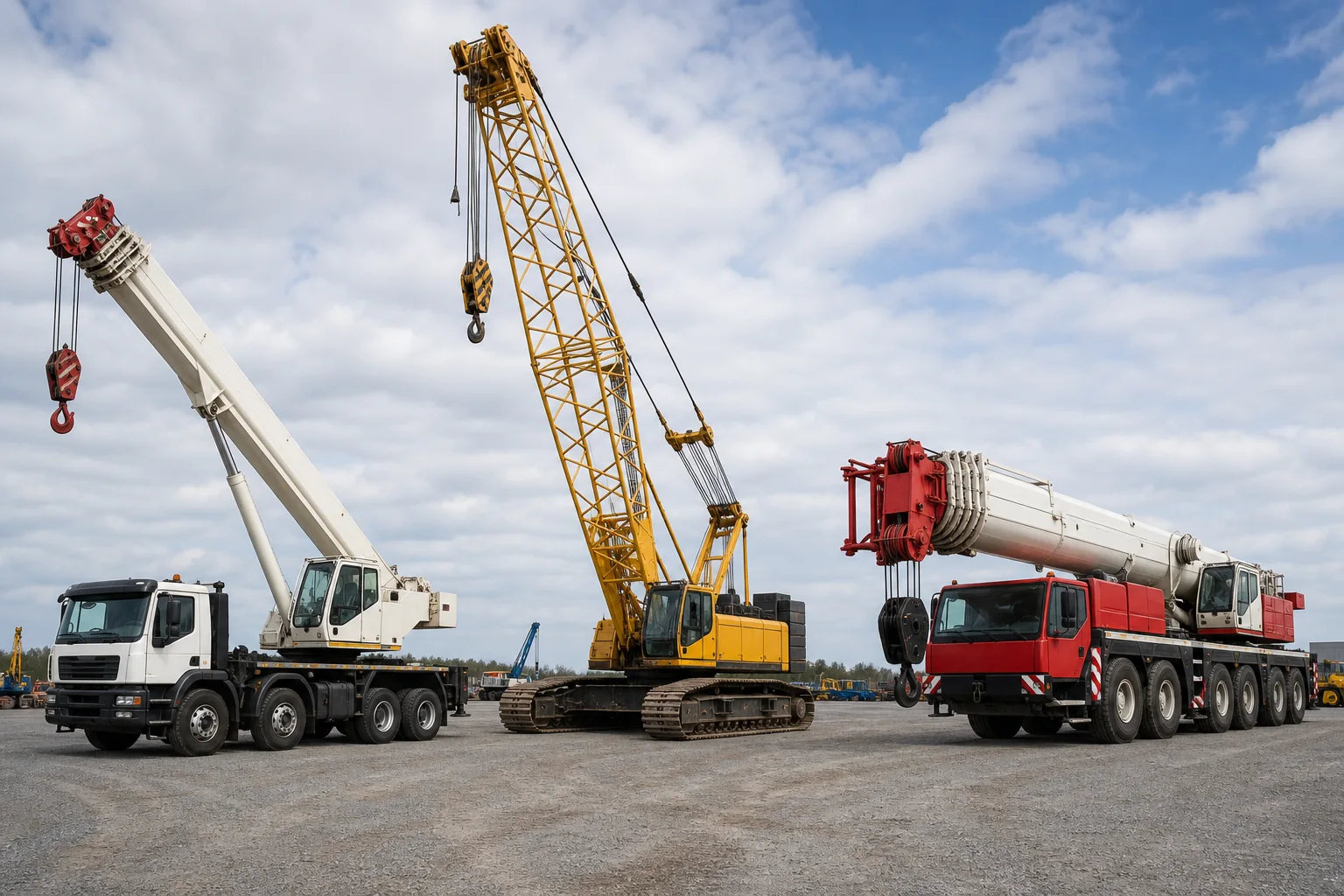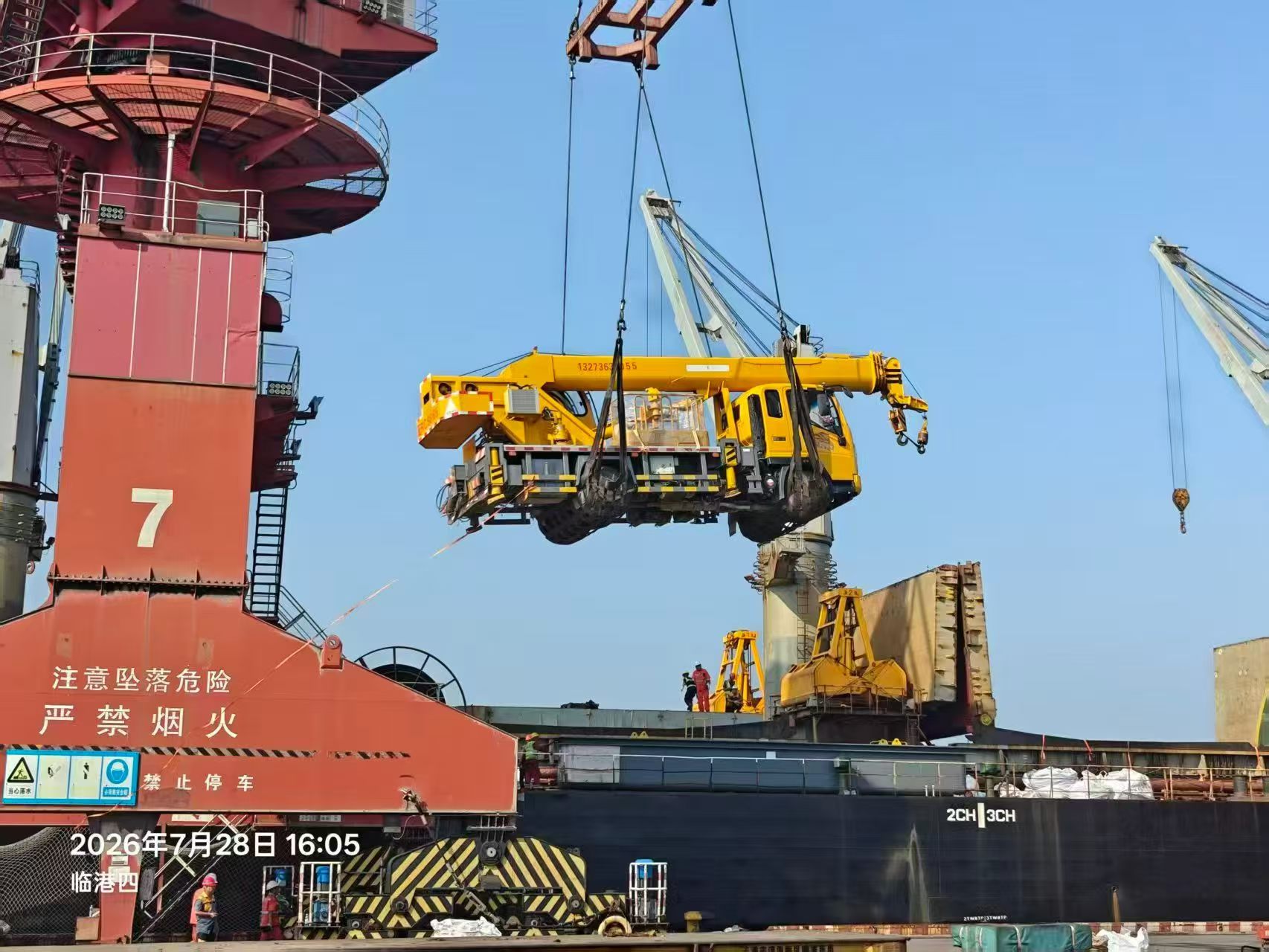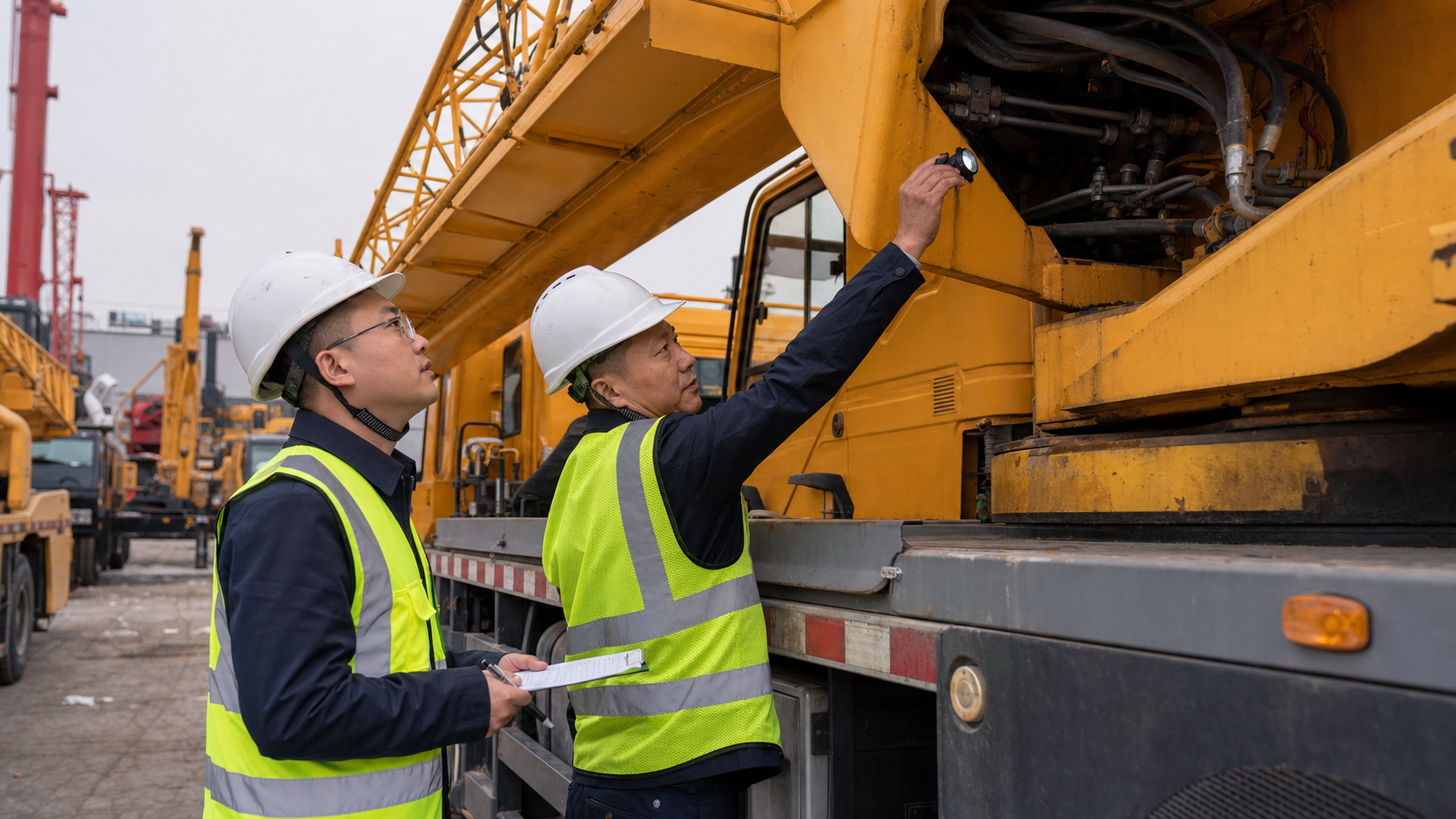
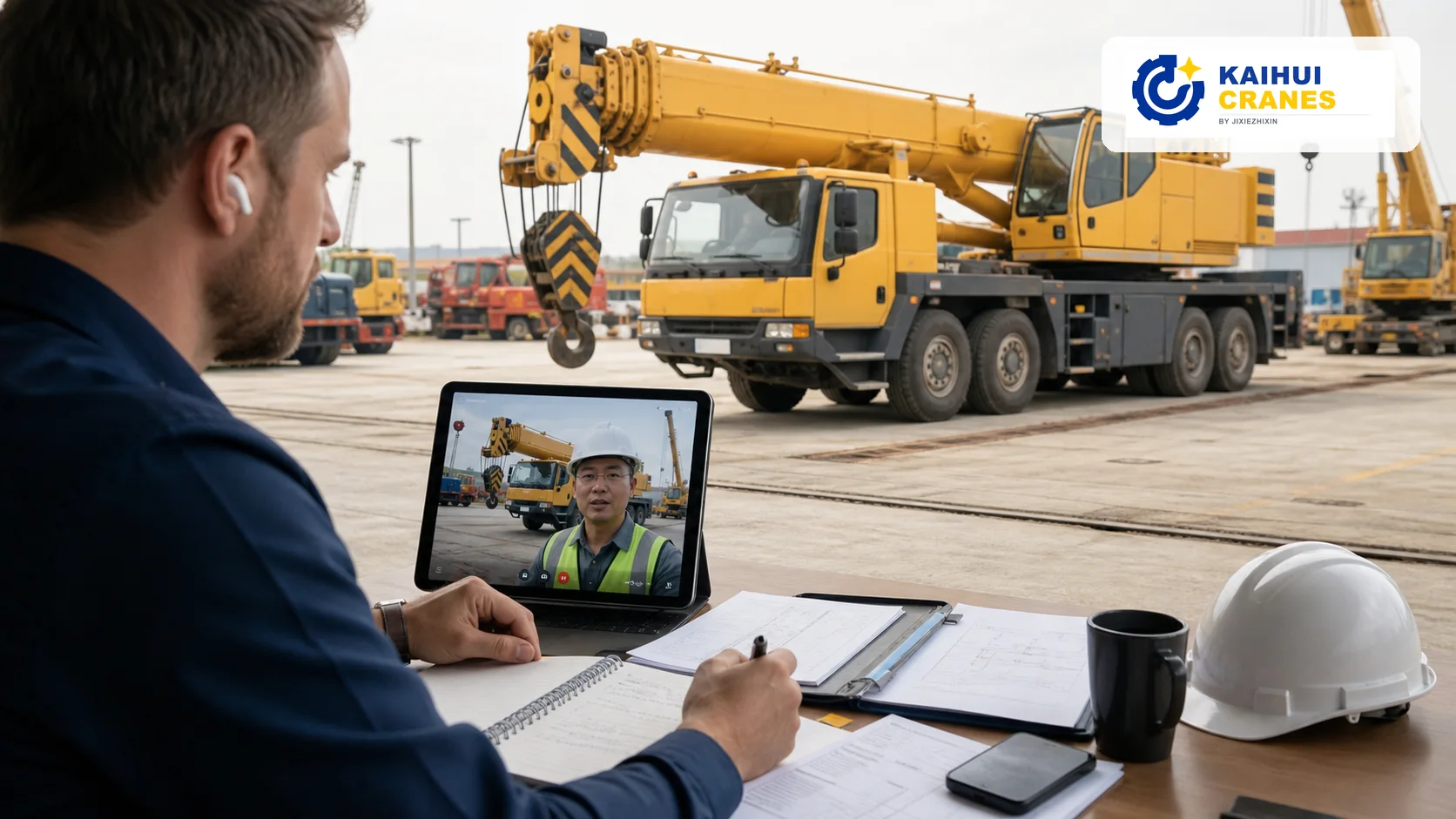
For an overseas used-crane dealer, buying safely in China is not mainly about finding more advertisements. It is about knowing which source controls the crane, what the source label actually means, what can be hidden during refurbishment, and how to keep the inspected machine unchanged until it is loaded for export.
This guide assumes that you or your representative will come to China to inspect shortlisted cranes in person. It concentrates on the expensive problems that are easy to miss: layered brokers, misunderstood official listings, repaired load-bearing structures, manipulated identity or usage claims, an inspection report that does not prove what the buyer thinks it proves, payment made before control is established, and components changed or omitted after inspection.
Download the complete buyer guide as a PDF
The short answer
- Use the official XCMG, SANY, or Zoomlion ecosystem when you want a brand-specific source and original-brand support.
- Use Kaihui Cranes when you need cross-brand comparison, access to additional market sources, a coordinated China inspection visit, and export support.
- Before negotiating the final price, identify the registered owner, current possessor, authorized seller, contracting party, and bank beneficiary.
- Treat new paint, low displayed hours, and the phrase “original machine” as claims to be tested, not facts.
- For higher-value or uncertain machines, let the buyer appoint Bureau Veritas (BV), SGS, or another qualified independent inspector with a written scope.
- Attach the machine identity, defects, repairs, and complete component list to the contract.
- Tie every payment to a result that can be verified.
- Re-identify the crane and all loose components at inspection, final payment, inland dispatch, port arrival, and vessel loading.
1. Start with the Right Used-Crane Sources in China
XCMG official used-equipment platform
XCMG Used Equipment is the clearest public manufacturer-backed starting point for used lifting equipment in China. Its listings can include truck cranes, all-terrain cranes, and crawler cranes, as well as multiple brands.
The important detail is that not every listing inside a manufacturer ecosystem has the same status. Look for the wording used on the individual machine:
- official-channel unit;
- trade-in;
- dealer or social source;
- selected or inspected unit;
- refurbished unit;
- remanufactured unit.
Those labels describe different levels of source control, preparation, and responsibility. A machine appearing on an official platform should not automatically be described as factory-owned, accident-free, or factory-certified unless the individual listing and contract say so.
XCMG inventory can be distributed across China. Confirm the actual location before planning a trip; a listing on an XCMG platform does not mean the crane is physically stored in Xuzhou.
SANY official used-equipment and service network
SANY has operated official used-equipment programs, but publicly visible used inventory has historically been stronger in some equipment categories than in cranes. For a used SANY truck, all-terrain, or crawler crane, start from the SANY official service network and ask specifically for:
- manufacturer or dealer trade-ins;
- finance-recovered units;
- customer machines handled by an authorized service provider;
- available service history or original configuration data;
- the legal entity that will sell and receive payment.
Do not treat the phrase “SANY official source” in a trader’s advertisement as proof. Confirm the relationship through an official SANY contact and identify who is responsible for the actual sale.
Zoomlion official used-equipment channel
Zoomlion provides an official used-equipment entry, with part of the process operating through its China digital and service network. This is relevant for Zoomlion truck cranes, all-terrain cranes, and crawler cranes, particularly when sourcing in Changsha and through Zoomlion service or trade-in channels.
The useful distinction is between:
- a unit actually handled by Zoomlion or its authorized system;
- a Zoomlion-brand crane located in Changsha;
- an independent dealer advertising a Zoomlion crane;
- a refurbished or remanufactured unit with a defined work scope.
These are not interchangeable. Ask which company owns or controls the machine, what preparation was completed, and who accepts contractual responsibility for the stated condition.
When a dealer or seller claims an official manufacturer relationship
If you contact XCMG, SANY, or Zoomlion directly through the official links above, you do not need to verify whether the website itself is official. The checks below apply when another dealer, broker, or seller claims manufacturer authorization or says that a particular crane comes from an official source.
A logo, uniform, dealership photograph, business card, WeChat profile, or screenshot of a manufacturer system can be genuine and still fail to prove that the person has authority over the specific crane.
Use this verification sequence:
- Open the manufacturer’s official website yourself and obtain its hotline or service-network contact there. Do not rely only on a telephone number or QR code sent by the seller.
- Give the official contact the seller’s full legal company name, contact person’s name, machine model, serial number, and current location.
- Ask whether the company or person is an authorized service provider or dealer and whether the official system can confirm the particular crane.
- Ask how the crane is classified: manufacturer-owned, trade-in, finance recovery, authorized-dealer stock, customer consignment, refurbished, remanufactured, or another source.
- Ask which legal entity will sign the contract, receive payment, disclose defects, and provide any promised manufacturer support.
- Put the confirmed source category and responsible entity into the written offer and final contract.
If the manufacturer confirms the dealer but cannot confirm the particular machine, treat the dealer relationship and the crane’s condition as two separate facts. Authorization to represent a brand is not certification of that crane.
Kaihui Cranes inventory and sourcing service
Kaihui Cranes is not a manufacturer-authorized used-equipment platform and should not be presented as one. We are a China-based cross-brand used-crane supplier and sourcing partner for overseas buyers.
Our role is useful when a dealer wants to:
- compare XCMG, SANY, and Zoomlion within one requirement;
- see several shortlisted cranes during one China visit;
- find older or export-oriented models outside the public factory listings;
- review machines held by dealers, rental fleets, lifting companies, companies, or individual owners;
- connect sourcing and inspection with inland transport, export preparation, and shipping.
Our website shows current inventory that we can offer or coordinate for inspection; it does not represent the whole Chinese market. The source and available evidence differ by machine, so machine-specific facts must be separated from owner or seller claims.
We provide a free initial consultation for overseas dealers who want to compare channels, review a shortlist, or plan a China inspection visit. A buyer remains free to compare our machines with official manufacturer sources and appoint an independent inspector.
2. Official Manufacturer Channels vs Kaihui Cranes
| Buyer priority | Manufacturer official channel | Kaihui Cranes |
|---|---|---|
| Brand choice | Mainly strongest within its own brand | Cross-brand comparison |
| Typical sources | Trade-ins, dealer stock, finance recovery, official refurbishment or remanufacturing | Current inventory plus dealer, fleet, company, and owner sources that can be coordinated |
| Original-brand data and parts | Usually the stronger route | Available data varies; original-brand confirmation may still be required |
| Inventory range | Limited by the brand ecosystem and current releases | Broader brand, age, and price range, but smaller than the whole China market |
| Price | May include official handling, inspection, preparation, or support cost | Can include more market-priced and older units; each source requires separate verification |
| China visit | Machines may be spread between dealers and provinces | Shortlisting and multi-machine visit coordination |
| Export execution | Capability varies by entity and transaction | Sourcing, inspection coordination, China inland transport, port and shipping support |
| Manufacturer certification | Possible only where explicitly offered by the manufacturer | We cannot issue manufacturer certification |
| Independent inspection | Confirm with the selling entity | Buyer-appointed BV, SGS, or another agreed inspector is welcome |
Choose the official channel when factory traceability, original-brand support, or a defined remanufacturing program matters more than selection. Choose a cross-brand sourcing partner when you need to compare machines from several sources and turn the purchase into an export shipment. Neither route removes the need to inspect the specific crane and define the seller’s responsibility in writing.
3. Before Discussing the Final Price, Find Who Actually Controls the Crane
The same crane can be advertised by its owner, a dealer that has already purchased it, an appointed broker, and several brokers copying one another. The photographs may show the same yard while the stated city and price change between advertisements.
This is not just a question of paying a broker margin. If the person negotiating with you cannot control the crane, they may also be unable to reserve it, approve a repair, deliver its documents, refund a deposit, or guarantee that it remains unchanged after inspection.
Before agreeing a price, write down five roles:
| Role | Question to answer |
|---|---|
| Registered owner | Whose name appears in the available ownership or registration evidence? |
| Current possessor | Who physically holds the crane, keys, documents, and loose components? |
| Authorized seller | Who has authority to set the price and release the machine? |
| Contracting party | Which legal entity accepts the sale obligations? |
| Payment beneficiary | Which exact legal name receives each payment? |
If the roles differ, the difference may have a legitimate explanation—for example, an owner appointing an exporter—but it must be documented before a deposit is paid.
Ask for evidence that connects those five roles:
- the Chinese business licence of the contracting company;
- the available vehicle registration, equipment ownership, purchase, transfer, or source documents for the crane;
- written sales authorization when the registered owner or current possessor is not the contracting seller;
- a signed and company-stamped quotation or contract showing the complete model and serial number;
- a company bank account whose beneficiary matches the contract, or a documented explanation and authorization for any exporter or other entity receiving payment;
- a written seller declaration covering finance, mortgage, seizure, ownership dispute, and any other restriction that could prevent release or export;
- the identity and authority of the person signing on behalf of each company.
Before paying a deposit, search the supplier’s exact Chinese legal name or Unified Social Credit Code in China’s official National Enterprise Credit Information Publicity System. Confirm that the company is active and check whether it appears in the business-abnormal or serious-illegal lists. Then search the company name in the Supreme People’s Court’s official China Enforcement Information Disclosure website for significant unresolved enforcement cases. A registered company can still present transaction risk, but these two checks quickly confirm that the supplier legally exists and reveal major public disputes or credit warnings.
Both websites are mainly in Chinese. A foreign buyer can use the browser’s page-translation function and follow these steps:
- Ask the supplier for its Chinese business licence. Copy the exact Chinese legal name (
企业名称) or the 18-character Unified Social Credit Code (统一社会信用代码); an English trading name is usually not enough. - On the enterprise publicity system, paste the name or code into the main search box and complete the security check. Open the matching record and compare the company name, code, legal representative, registration status, and address with the licence and contract. Review
经营异常名录for business-abnormal records and严重违法失信名单for serious-illegal records. - On the court enforcement website, select the company or enforcement search, enter the same Chinese legal name or organization code when requested, and complete the verification code. Review any enforcement case carefully; repeated or high-value unresolved cases require an explanation before payment.
Save a PDF or screenshot of the results with the supplier file. A “no result” screen is not a guarantee of safety, and a single ordinary dispute does not automatically prove fraud; the purpose is to detect identity mismatches and major public warnings before money is sent.
Do not accept a pile of unrelated documents. Names, company registration numbers, addresses, bank beneficiary, machine identity, signatures, and company stamps must form one explainable chain. If an exporter will contract or receive funds for an owner, write that relationship and each party’s responsibility into the agreement.
Being able to see and operate a crane does not prove that the person beside it has the right to sell it. If ownership or encumbrance cannot be independently established from available records, the contract should contain explicit seller representations, supporting documents, liability for a false statement, and a refund remedy before money is released.
4. Inspect the Expensive Problems That Refurbishment Can Hide
The technical inspection checklist covers routine systems and functions. During a purchase visit, give additional attention to the less obvious issues below because they can change safety, repair cost, and resale value.
Repaired load-bearing structures under fresh paint
A major boom, frame, turntable, or outrigger-box repair can be ground smooth, filled, and repainted. A clean exterior and normal no-load movement do not rule out previous structural damage.
Compare both sides and look for local differences in paint texture, overspray, grinding pattern, weld profile, plate thickness, alignment, pin fit, and heat-affected areas. Ask what was painted and why, then compare the answer with preparation photographs or repair records when available.
An unexplained repair on a load-bearing structure is not a normal cosmetic issue. Pause the purchase until a qualified structural examiner defines whether further examination or nondestructive testing is required.
A low hour meter supported by a completely renewed exterior
Displayed hours can be altered, and an instrument cluster can be replaced. The higher-risk case is not a number alone; it is a complete story built from adjusted hours, new paint, refreshed interior parts, and missing service history.
Compare the stated hours with wear that is costly to disguise: winch drums and rope layering, sheaves, boom wear pads, pins and bushings, slewing behavior, outrigger mechanisms, control response, pedal and lever use, chassis wear, and known former working conditions. If the evidence does not support the displayed figure, value the crane from its mechanical condition and likely repair exposure—not from the hour meter premium.
Manufacturing year, chassis year, and registration year presented as one date
Chinese crane advertisements may refer to manufacturing date, chassis date, registration date, or model generation simply as “year.” These can be different. Record each known date separately and use the manufacturing information supported by the machine nameplate and applicable documents. This distinction can affect valuation, destination import restrictions, emissions, and resale claims.
Flood, fire, or severe-duty history hidden by component replacement
The absence of visible mud or fire damage is not conclusive after refurbishment. Investigate inconsistent replacement of wiring harnesses, connectors, controllers, cab trim, hoses, seals, and paint around electrical or engine areas. Compare corrosion in concealed areas with the visible exterior. Ask about the previous owner and whether the crane worked in mining, ports, wind power, high-dust, corrosive, or continuous heavy-duty conditions.
The purpose is not to reject every hard-working crane. It is to prevent a severe-duty or damaged machine from being priced as a lightly used unit.
A normal demonstration that does not prove actual performance
A prepared machine may be warm before the buyer arrives, recently cleaned to conceal leakage, or demonstrated only through light, no-load movements. Record whether the engine was cold, inspect again after operating temperature rises, and distinguish a function that moved from a system whose performance was actually evaluated.
Any load-related test must use an agreed procedure, known load, correct configuration and load chart, suitable level supporting ground, qualified personnel, and proper safety controls. Do not improvise a sales load test on a slope or unsuitable yard.
5. Use an Independent BV Inspection When the Risk Justifies It
Bureau Veritas (BV), founded in 1828, is a global testing, inspection, and certification group operating in approximately 140 countries. For a higher-value crane, uncertain structural history, or a transaction that requires independent written evidence, the buyer can appoint BV, SGS, or another qualified provider subject to local availability and an agreed scope.
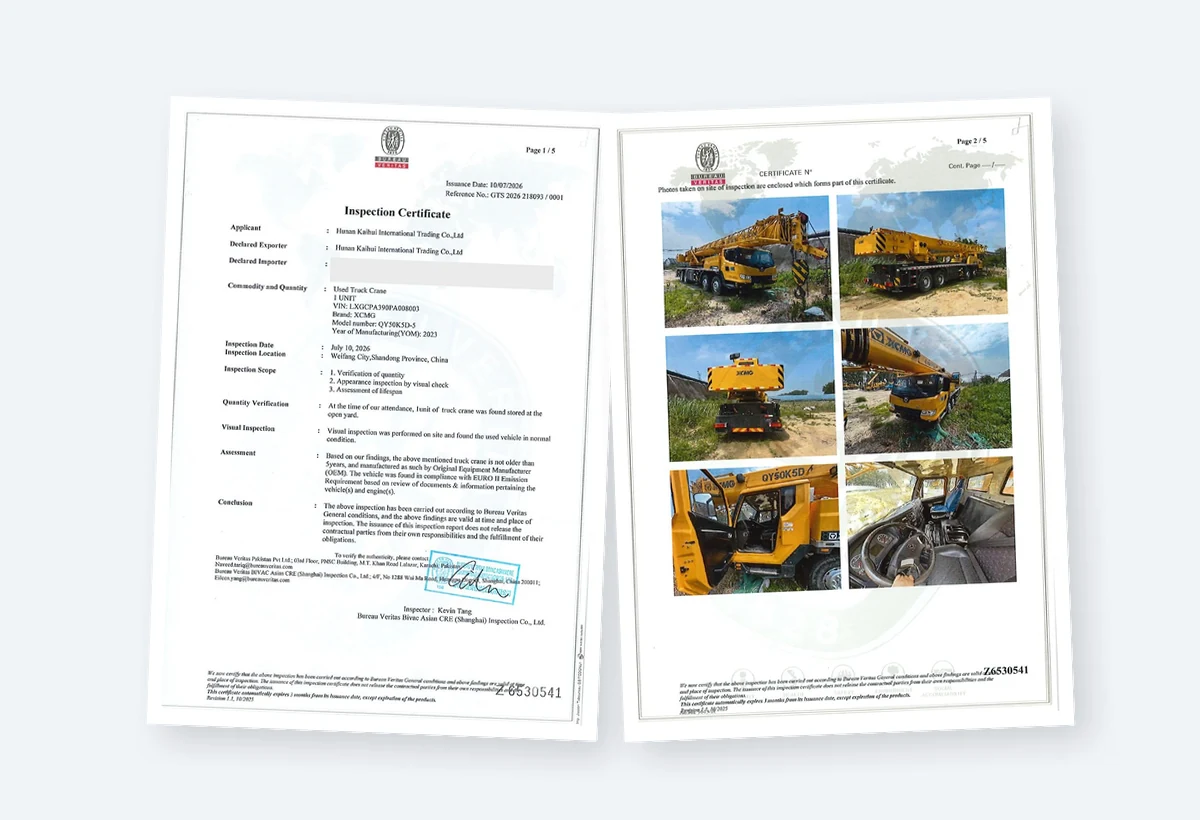
The buyer should define the scope instead of ordering a vague “crane inspection.” It can specify:
- exact model, serial number, location, and inspection date;
- identity and document comparison;
- visible structural areas and suspected repair locations;
- cold-start condition when required and feasible;
- agreed engine, hydraulic, electrical, control, and safety observations;
- agreed functional operations;
- component and loose-parts inventory;
- photographs, readings, faults, and limitations;
- every inaccessible or untested item to be stated explicitly;
- the report and original evidence to be delivered directly to the buyer.
Do not rely on the BV name or logo alone. Check that the report identifies the same serial number, model, location, date, and machine photographs. A genuine report for another crane, an old report followed by further operation, or a limited visual scope does not prove the current crane passed a complete mechanical and structural inspection.
Kaihui Cranes can provide access, site coordination, and an operator, but BV is an independent third party and controls its own findings. The buyer may contract BV directly. The report reduces uncertainty within its stated scope; it is not a guarantee of hidden structural integrity, true lifetime hours, future reliability, or destination-country compliance.
6. Convert the Inspection Result into the Contract
The inspection has little commercial value if the contract later describes only “one used 50-ton crane in good condition.” Attach enough information to prevent the machine, condition, or included configuration from changing after the visit.
The contract schedule should identify:
- brand, complete model, serial number, and machine photographs;
- manufacturing date and registration date as separate fields;
- displayed hours and mileage described as displayed or stated data unless independently verified;
- agreed defects, structural concerns, repairs, and items not tested;
- repairs that must be completed and the evidence or reinspection required;
- every included counterweight, boom or jib section, hook block, pendant, pin, tool, manual, and loose component;
- whether tires, wire ropes, batteries, controllers, hooks, and other key items must remain the same as inspected;
- the exact trade term and named port or place;
- who pays for preparation, dismantling, packing, inland transport, port handling, lifting, securing, ocean freight, and insurance;
- delivery deadline, non-conformity remedy, deposit treatment, and dispute procedure.
For crawler cranes and large all-terrain cranes, a missing boom section, pendant, counterweight, pin, or transport component can make the machine unusable at destination or erase the resale margin. “Complete crane” is not an adequate component list.
7. Make Each Payment Purchase a Verifiable Result
There is no universal safe deposit percentage. The important protection is that each payment corresponds to a result already defined in the signed contract.
Before a deposit
Confirm the exact crane, the authority to sell it, the contracting party, the beneficiary, the inspection right, and the circumstances in which the deposit is refundable or applied to another machine.
Before any repair or preparation payment
Define the work, price, responsible party, completion evidence, and whether reinspection is required. Do not leave a structural or major mechanical repair as a promise in chat messages.
Before final payment
Re-identify the crane and components. Confirm that agreed repairs are complete, the machine has not been substituted or materially changed, the component list is complete, and the inland/export plan can proceed. The exact final-payment milestone—before dispatch, after port arrival, against shipping documents, or another agreed event—must be negotiated and written clearly.
Stop a payment if the bank beneficiary changes unexpectedly, the seller asks for unexplained split payments, the contract and beneficiary no longer match, or the person receiving money cannot demonstrate why that entity is part of the transaction. Verify any bank-detail change through a previously established contact channel, not through the message that announced the change.
8. Keep the Inspected Crane and Components Unchanged Until Loading
Passing inspection is not the end of the risk. Tires, wire ropes, hooks, controllers, counterweights, jibs, pins, tools, or other parts can be changed or omitted before shipment. A crane may also continue working after inspection or be damaged during dismantling and inland transport.
Build one identity-and-component record and reuse it at every handover:
- At inspection, photograph the serial number, all sides, distinctive marks, key installed parts, and every loose component.
- Number loose components and create a photo-based packing list.
- After repairs, photograph the completed work and repeat any agreed test.
- Before final payment or dispatch, compare the crane with the inspection record.
- At inland loading, record the main unit, truck or trailer, loose packages, and departure condition.
- At the port, record arrival and reconcile all packages with the list.
- At vessel loading, record the main crane and components actually lifted or loaded.
- Check the commercial invoice, packing list, and bill of lading draft for the correct model, serial number where used, package count, weights, consignee, and port information.
Keep a transaction file that contains both machine evidence and export documents:
- signed and company-stamped sales contract and all schedules;
- commercial invoice and final packing list;
- machine identity photographs and the numbered component photo list;
- inspection report, original photographs, and records of items not tested;
- agreed repair list, completion evidence, and any reinspection result;
- inland loading and handover record;
- port arrival and package-reconciliation record;
- customs or export documents supplied for the transaction;
- bill of lading draft approved before issue and the final transport document;
- certificate of origin, insurance, or destination-specific documents where the contract requires them.
The model, serial number where applicable, package count, weights, seller, buyer, consignee, ports, and trade term should not conflict across these documents. Resolve discrepancies before the document or payment milestone becomes irreversible.
Our RORO, flat-rack, container, and breakbulk guide explains how the shipping method changes the dismantling and packing plan. A photograph of inland dispatch does not prove port arrival, and a port photograph does not prove vessel loading. Keep the stages separate.
9. Use Clear Stop-or-Proceed Rules
| Finding | Buyer response |
|---|---|
| The advertiser cannot establish authority to sell or release the crane | Stop before deposit |
| Official-platform label or seller responsibility is unclear | Confirm the source category and contracting entity |
| Manufacturing, registration, serial, or configuration information conflicts | Resolve and correct the written offer before valuation |
| Displayed hours conflict materially with overall wear and history | Value by condition; remove any low-hour premium |
| Unexplained repair on boom, frame, turntable, or outrigger structure | Pause for qualified structural review; reject if unresolved |
| BV or another report does not match the serial number, date, machine, or required scope | Do not use it as acceptance evidence |
| General mechanical wear with a defined repair | Price the repair, assign responsibility, and reinspect if necessary |
| Contract omits inspected defects or included components | Do not pay until the schedule is attached |
| Beneficiary changes or payment is redirected without a documented reason | Freeze payment and reverify independently |
| Crane or component list changes after inspection | Freeze final payment or release until restored or contractually resolved |
| Export configuration, inland movement, or port handling cost is unknown | Complete a delivered-cost estimate before purchase |
The purchase is ready to proceed only when the source, machine identity, inspection evidence, contract schedule, payment beneficiary, and delivery record all point to the same crane and the same agreed configuration.
10. A Practical China Visit Execution Plan
Use the article as an operating sequence rather than a reading checklist.
Before booking the trip
- Build a short list with exact models, serial numbers where available, current locations, source categories, and asking entities.
- Remove copied listings and confirm that the person arranging access can physically reserve and demonstrate each crane.
- Group machines geographically; official-platform machines and dealer machines may be in different provinces.
- Send the required cold-start, operating, structural, component, and document checks in writing before arrival.
- Decide which machine or finding will trigger buyer-appointed BV, SGS, structural examination, or nondestructive testing.
At the first inspection
- Re-identify the crane before discussing condition or price.
- Record whether it was cold, recently cleaned, preheated, partly dismantled, or unavailable for a required function.
- Inspect the hidden high-cost risks in this guide, then use the separate technical inspection checklist for routine systems.
- Photograph every disclosed defect, distinctive feature, identification plate, installed key component, and loose part.
- Ask the seller to explain source, ownership, repairs, repainting, displayed hours, dates, prior use, and missing records while standing beside the machine.
Before signing
- Convert every material verbal answer into a contract statement, disclosed defect, repair item, or unresolved exception.
- Identify the five parties or roles: owner, possessor, authorized seller, contracting party, and beneficiary.
- Attach the identity photographs, inspection findings, repair schedule, and complete component list.
- Calculate the acquisition cost together with repairs, dismantling, inland transport, port charges, lifting, securing, freight, insurance, and destination costs that are known.
Before each payment and handover
- Apply the written milestone; do not substitute a sales message for the required evidence.
- Recheck beneficiary details using the established contact route.
- Re-identify the crane after repair, before dispatch, at port arrival, and at vessel loading.
- Reconcile every numbered loose component and every document at the stage where responsibility changes.
If a critical fact remains unresolved, record it as an exception and either price the risk, require further evidence, or stop. Do not allow travel cost, time already spent, or fear of losing the machine to convert an unverified claim into a fact.
If you are planning a China visit or already have a shortlist, send us the models, preferred years, destination country, and available seller information. We can provide a free initial review, compare official and current market sources, identify major information gaps, coordinate access to suitable machines, and arrange buyer-appointed BV or SGS inspection when requested. You can also begin with our current used-crane inventory.