The practical answer to RORO vs container shipping is not that one method is always cheaper or safer. The correct method depends on the exact used crane, its operating condition, packed dimensions and weights, the departure and destination ports, vessel acceptance, and the services available on the intended sailing.
This guide covers the four methods commonly evaluated when shipping used cranes from China: RORO, flat rack, standard container, and breakbulk. It explains what must be verified before a freight forwarder or carrier can provide a meaningful quotation.
RORO vs Container Shipping: Quick Answer
| Method | Usually evaluated for | Main verification |
|---|---|---|
| RORO | Complete self-propelled wheeled cranes | Running condition, dimensions, vessel and port acceptance, securing rules |
| Flat rack | Oversized equipment or dismantled components compatible with a container vessel | Packed size and weight, out-of-gauge acceptance, lifting and securing plan |
| Standard container | Parts and components that fit inside the selected container | Internal dimensions, door opening, payload, weight distribution, packing |
| Breakbulk | Complete or dismantled cargo not suited to the other methods | Piece list, lifting points, vessel gear, port handling, stowage and securing |
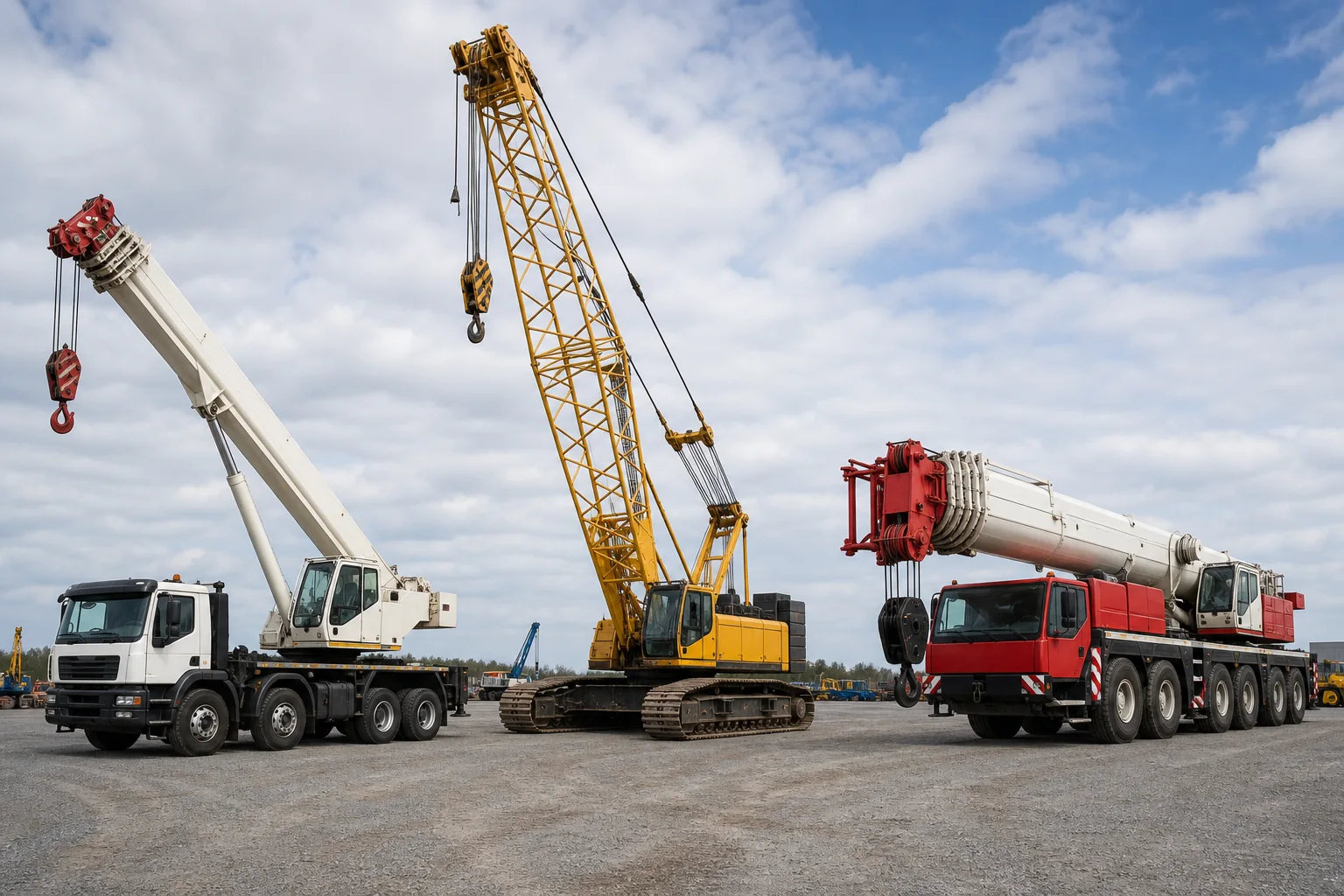
RORO and container shipping are not direct substitutes in every case. A complete truck crane might be evaluated for RORO, while loose counterweights or boom sections may travel separately. A crawler crane usually becomes a multi-piece shipment after dismantling.
Information Needed Before Choosing a Method
Do not request freight using only a model name or rated capacity. Prepare a machine-specific transport file:
- Identification: brand, complete model suffix, serial number, stated year, and equipment type.
- Operating condition: whether the crane starts, drives, steers, brakes, and can safely move during port handling.
- Complete dimensions: transport length, width, and height in the proposed shipping configuration.
- Weights: total operating or transport weight plus the weight of each separated component.
- Configuration: boom, jib, counterweights, hook blocks, outriggers, crawler assemblies, tools, and spare parts included.
- Photographs: all sides, lifting points, undercarriage, loose components, and proposed dismantled condition.
- Route: preferred China departure port, destination port, and any delivery deadline.
- Trade term: the point at which cost, risk, freight, insurance, and import responsibility transfer between seller and buyer.
Carrier brochures and generic container specifications are not approval. The freight forwarder must confirm acceptance for the actual cargo and sailing.
RORO Shipping
RORO means roll-on/roll-off. Cargo moves onto and off the vessel using its wheels or an agreed terminal handling method. For a used mobile crane, the first question is whether the machine can safely start, travel, steer, and brake when the ports require it.
RORO may be considered when
- the crane is complete, wheeled, and self-propelled;
- its transport dimensions fit the selected vessel’s access and deck restrictions;
- the departure and destination ports handle suitable RORO service;
- the machine meets the carrier’s condition, fuel, battery, leakage, and safety requirements;
- suitable securing points and instructions are available;
- the buyer accepts the route, sailing frequency, handling process, and trade term.
RORO may not be suitable when
- the machine cannot reliably move under its own power;
- dimensions, weight, axle loads, leakage, or condition fall outside carrier rules;
- loose components cannot be safely secured or accepted with the unit;
- the required ports or sailing do not offer suitable service;
- destination restrictions make another configuration more practical.
RORO should not be described using a universal maximum crane tonnage. Vessel ramps, decks, internal clearances, port rules, and carrier acceptance differ.
Flat Rack Shipping
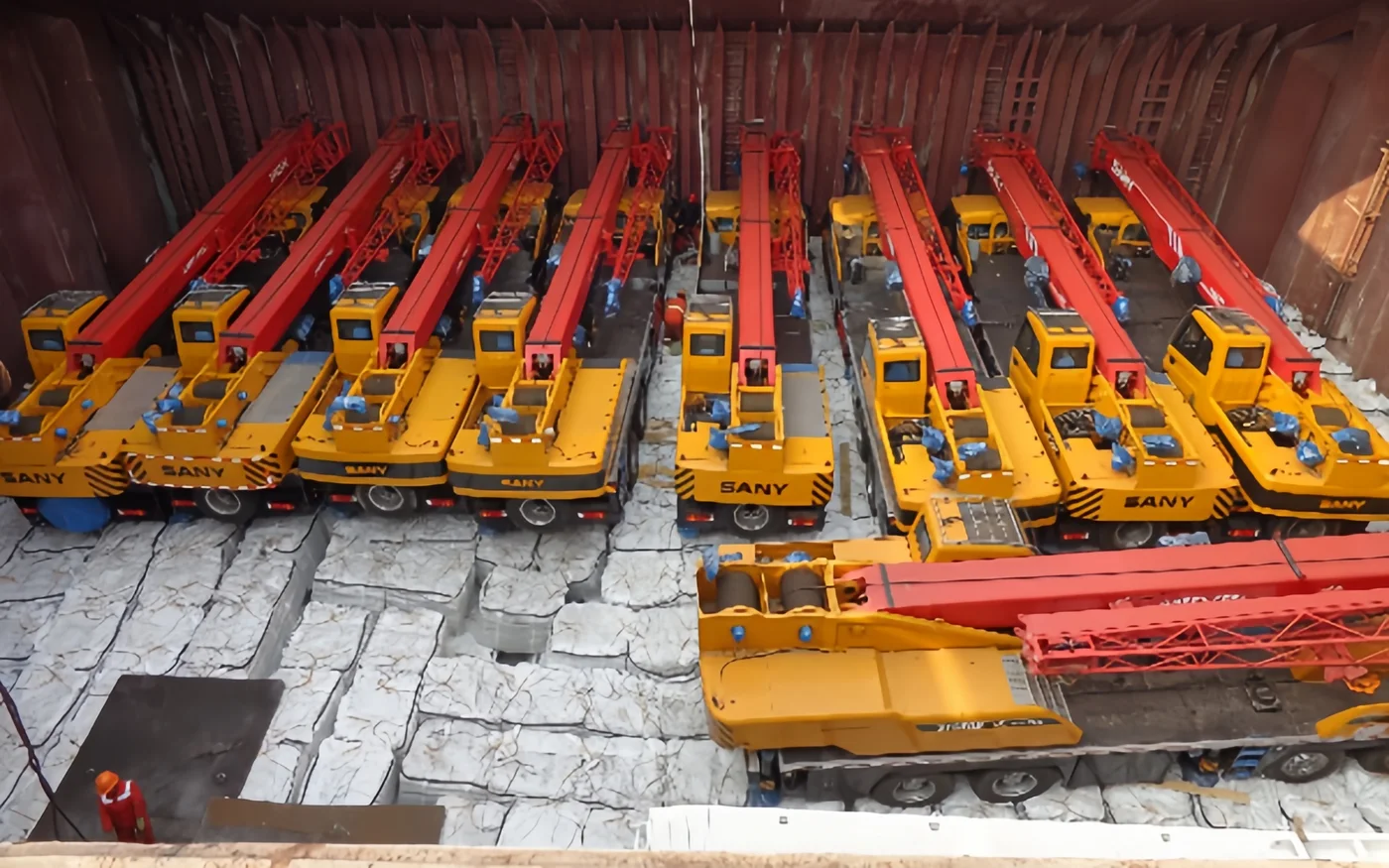
A flat rack is a container platform with end structures and no conventional side walls or roof. It can be considered for cargo that is compatible with container-vessel handling but exceeds a standard container’s enclosure.
The quotation requires packed dimensions, weight, center of gravity where requested, lifting points, blocking, bracing, lashing, and the amount of out-of-gauge space occupied. Carrier approval must match the selected flat rack and sailing.
Flat rack may suit a crane body or separated components, but a generic payload figure does not prove compatibility. Equipment rating, concentrated loads, weight distribution, lifting method, terminal limits, and carrier rules all matter.
Standard Container Shipping
Standard containers are generally evaluated for parts, tools, rigging, suitable boom sections, or other dismantled components that fit completely inside the selected unit. A complete crane rarely belongs in this category unless its packed configuration genuinely fits.
Verify:
- internal length, width, and height;
- usable door opening;
- payload and gross-weight limits;
- floor loading and weight distribution;
- packing, moisture protection, blocking, and securing;
- safe loading and unloading equipment at both ends;
- compatibility with other items packed in the same container.
The packing list should identify which components travel in each container so the buyer can check completeness at arrival.
Breakbulk Shipping
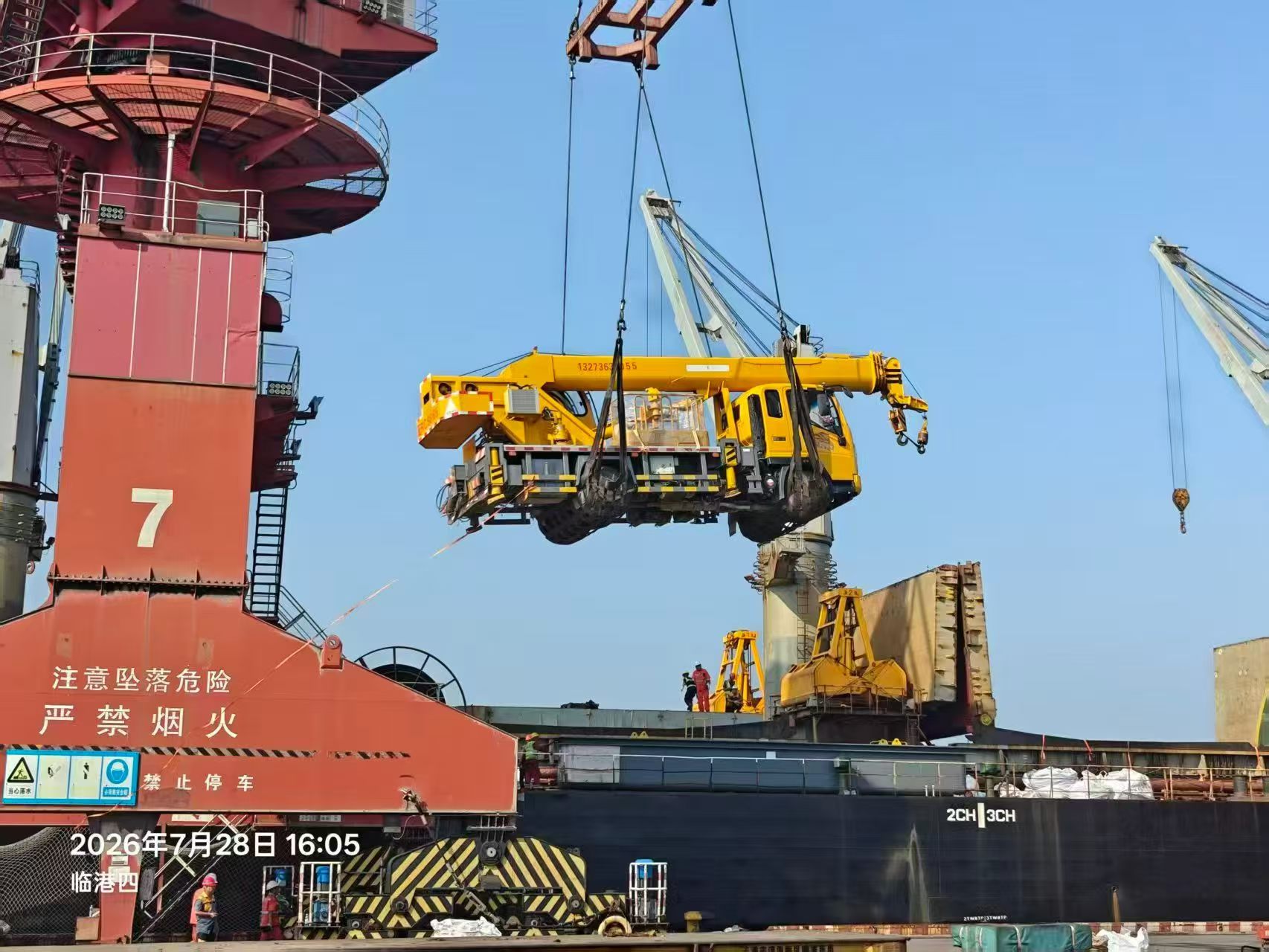
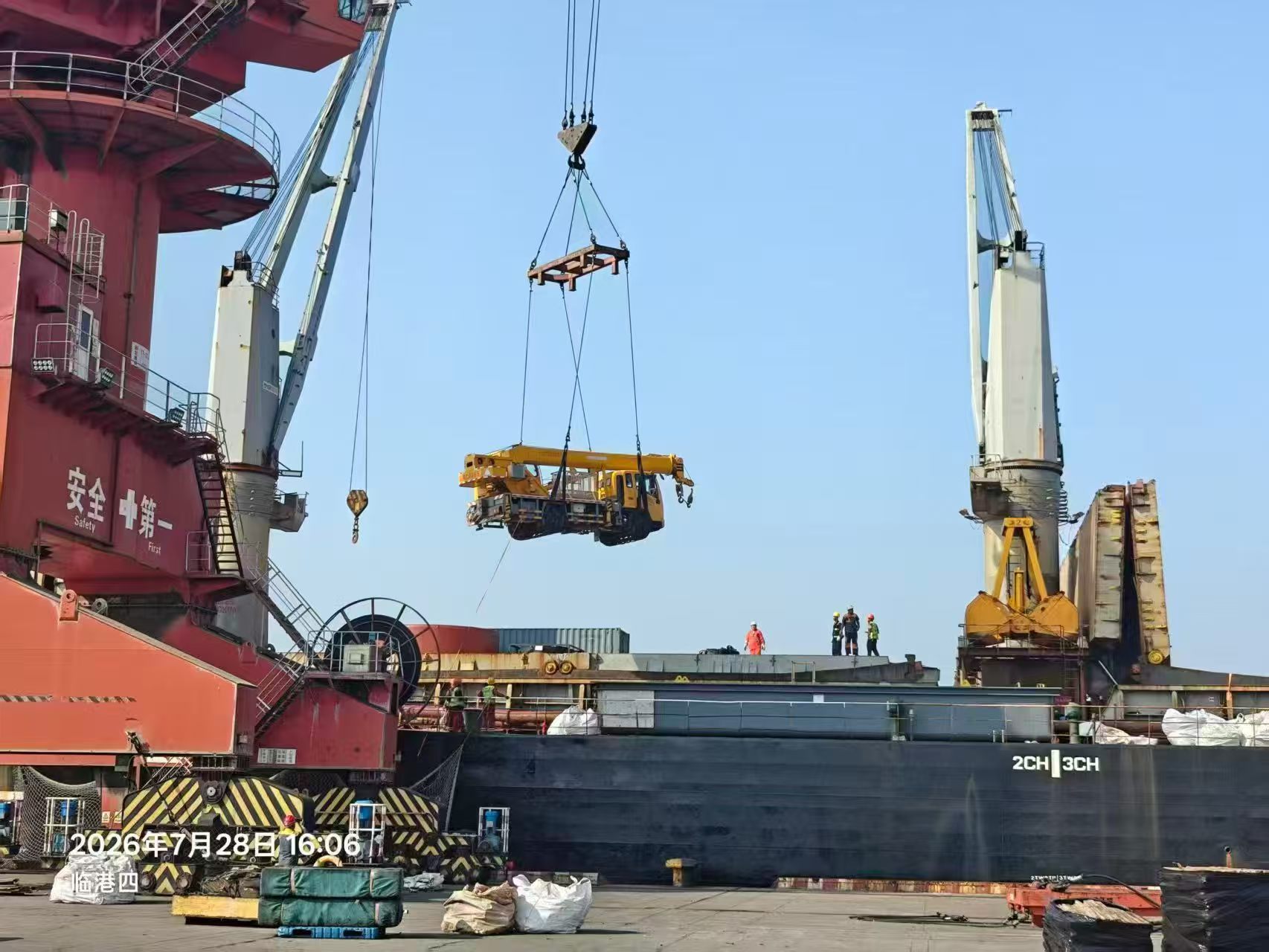
Breakbulk cargo is loaded as individual pieces rather than inside standard container equipment. It may be evaluated for complete cranes or dismantled packages that do not fit approved container solutions.
A breakbulk inquiry normally needs a detailed piece list, dimensions and weights for every item, lifting points, photographs, center-of-gravity information when requested, stowage requirements, securing plan, and confirmation of handling capability at both ports.
Breakbulk availability and pricing depend heavily on vessel space, route, port capability, cargo volume, and sailing timing. It should not be presented as a fixed premium over RORO or flat rack.
Full Method Comparison
| Decision factor | RORO | Flat rack | Standard container | Breakbulk |
|---|---|---|---|---|
| Typical cargo state | Complete wheeled unit | Oversized unit or component | Enclosed component or parts | Complete or dismantled pieces |
| Cargo movement | Driven or handled under terminal rules | Lifted with container equipment and cargo plan | Packed and lifted as a container | Each piece lifted and secured |
| Key constraint | Vessel and port acceptance | Equipment rating and out-of-gauge approval | Internal, door, payload, and floor limits | Vessel space and port lifting capability |
| Weather exposure | Depends on vessel position and process | Out-of-gauge cargo requires suitable protection | Enclosed after doors close | Depends on stowage position and protection |
| Best quotation input | Complete unit dimensions, weight, condition | Packed size, weight, lifting and securing details | Packing plan and component list | Full piece list and lifting details |
The shipping method should be selected only after the identified crane and included components are confirmed. Changing the boom, counterweight, hook block, tires, tracks, or dismantling plan can change the quotation.
What Changes the Shipping Cost?
A credible crane freight quotation can include more than the ocean freight line:
- China-side inspection or preparation agreed in the sale;
- dismantling, packing, labeling, and protection;
- inland movement to the departure port;
- loading, lifting, terminal, and documentation charges;
- equipment hire such as flat racks or special transport;
- out-of-gauge, heavy-lift, stowage, and securing charges;
- carrier surcharges and route-specific fees;
- marine insurance when included or separately arranged;
- destination-port handling, storage, customs, duties, taxes, and delivery;
- reassembly, testing, registration, and commissioning after arrival.
Rates change with capacity, fuel, season, congestion, equipment availability, vessel space, and route. For this reason, the article does not publish a fixed regional price table.
Compare quotations on the same basis. A low ocean-freight figure is not necessarily a lower delivered cost if it excludes loading, securing, terminal, destination, or equipment charges.
Documents and Responsibility Boundaries
Common transaction and shipping documents can include:
- commercial invoice;
- packing list and component list;
- bill of lading;
- export customs declaration;
- certificate of origin when applicable;
- insurance certificate when insurance is arranged under the transaction;
- inspection, identification, technical, or destination-specific documents when required.
The final list varies by cargo, destination, buyer status, trade term, and current regulation. Requirements such as pre-shipment inspection or certification are not universal across every country and transaction.
Before payment, record in the contract or proforma invoice:
- the identified machine and included components;
- the agreed inspection and preparation scope;
- trade term and named port or place;
- who arranges inland transport, loading, ocean freight, and insurance;
- who bears destination handling, import clearance, duties, taxes, storage, and delivery;
- the documents each party must provide;
- payment stages and evidence required before each stage.
Buyers should confirm destination requirements with a licensed local customs broker before the machine is shipped.
Request a Route-Specific Quote
For a useful RORO, flat rack, container, or breakbulk comparison, send:
- the link to the exact current crane listing, or its complete model and serial number;
- included boom, jib, counterweight, hook blocks, crawler assemblies, tools, and parts;
- current transport dimensions and weights;
- photographs of the machine and all loose components;
- departure preference and destination port;
- preferred FOB, CIF, or other agreed trade term;
- destination document or inspection requirements already confirmed by the buyer’s broker.
Kaihui Cranes can coordinate the China-side machine information, export documents, loading evidence, and current route quotation according to the agreed scope. Review the Export & Shipping service page or send the machine and destination port to begin.